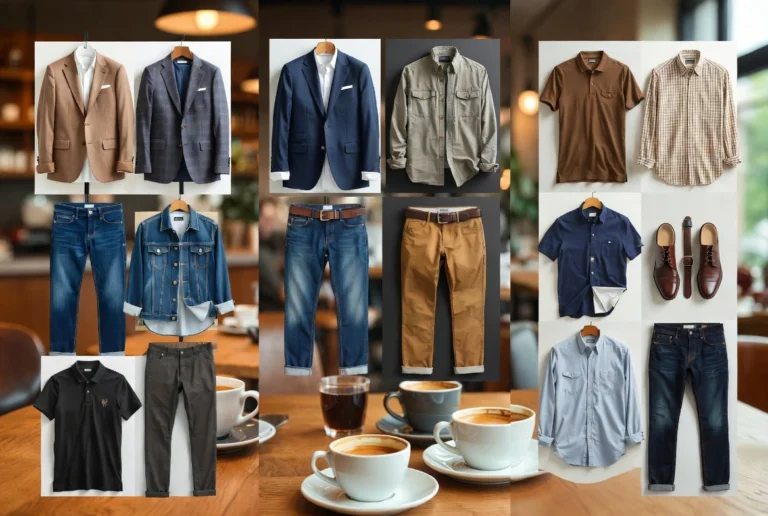

30+ Business Casual Work Outfits That Balance Professionalism and Style
The anticipation of a new workweek brings with it a familiar challenge: what exactly should you wear? Business casual is one of those dress codes that sounds straightforward until you are actually standing in front of your wardrobe, second-guessing every choice. It sits in that intentional space between formal business attire and everyday casual wear, demanding just enough polish to project credibility while leaving room for personal expression and genuine comfort.
What makes business casual so powerful, when done well, is that it allows you to walk into any professional environment with quiet confidence. Your clothing communicates that you are serious about your work and your presence without the stiffness of a full suit or the carelessness of overly casual choices. Getting this balance right is not about following rigid rules. It is about understanding the principles that make an outfit look considered, then applying them consistently to your own wardrobe.
This guide presents thirty business casual work outfits covering men, women, seasonal shifts, and hybrid work realities, alongside the foundational knowledge to build a wardrobe that always serves you well. Whether you are dressing for a high-stakes client meeting, a regular office day, or a back-to-back schedule of video calls, these outfits ensure you are always prepared with something that works.
What Business Casual Actually Means Today
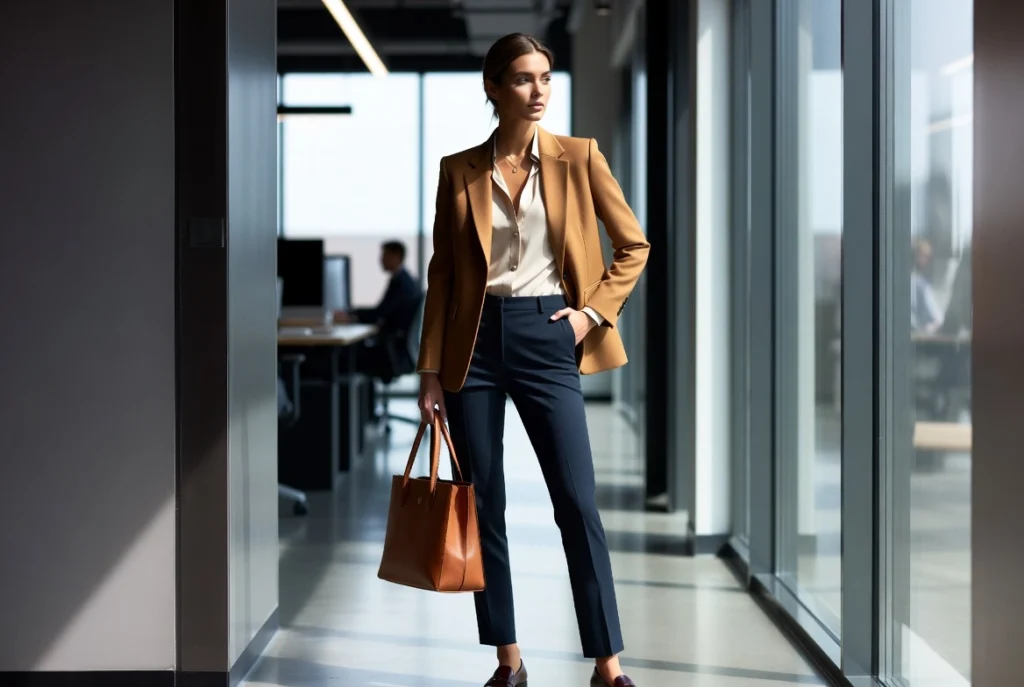
Business casual is best understood as a dress code that communicates competence while allowing for personal expression. It lives between formal business attire and everyday casual wear, and that middle ground has evolved significantly over the past several years. Back-to-office trends, hybrid work schedules, and generational shifts in workplace culture have all shaped what is considered appropriate in professional environments.
The definition varies meaningfully across industries. In finance or law, business casual tends to lean toward the more formal end of the spectrum, with tailored trousers, pressed shirts, and structured blazers as the baseline. In creative or technology-focused industries, it often stretches toward elevated, fashion-aware combinations that would feel overdressed in more traditional workplaces. Understanding your specific industry and company culture is always the first step toward getting business casual consistently right.
At its core, business casual for both men and women includes well-fitted trousers, tailored blazers, clean blouses or button-down shirts, knit sweaters, midi skirts, loafers, Oxfords, low heels, and structured accessories. The single most important principle throughout is intentionality. Every element of a strong business casual outfit should feel deliberate rather than assembled in a hurry.
The Power of a Well-Fitted Blazer
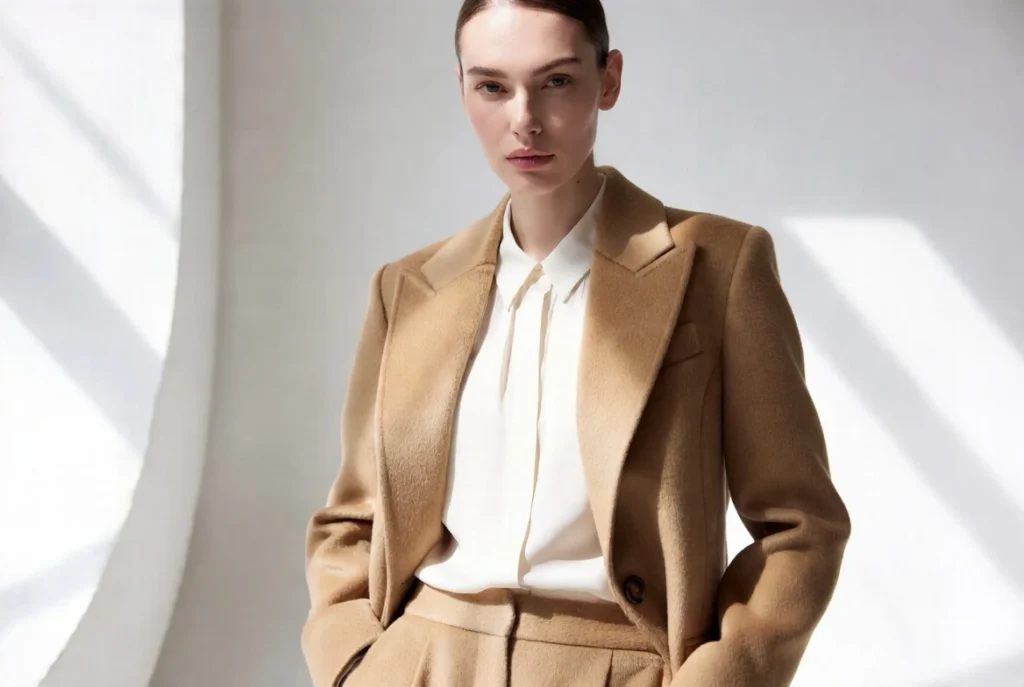
No single piece does more work in a business casual wardrobe than a well-fitted blazer. It is the garment that most reliably bridges the gap between casual and professional, transforming otherwise simple outfits into polished, office-ready looks. A blazer communicates structure and authority without the full weight of a formal suit, making it the foundational investment piece for anyone building a professional wardrobe.
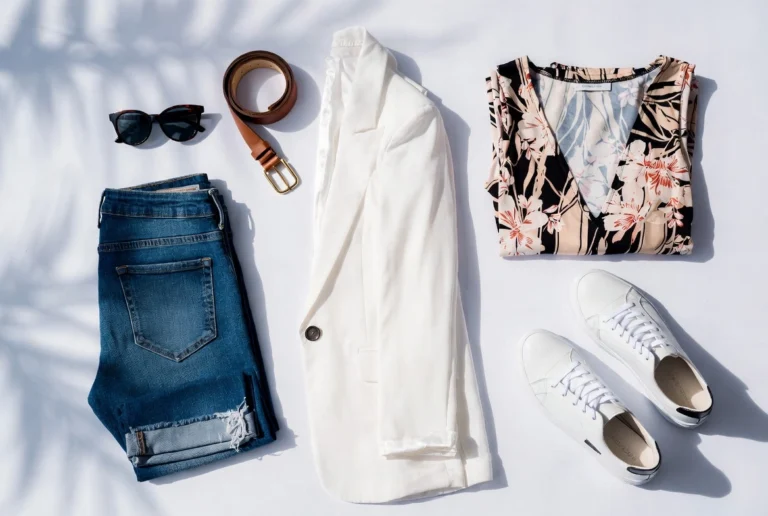
For women, blazers in camel, navy, charcoal, or soft ivory work across dozens of outfit combinations. Pair a fitted blazer with a silk blouse and wide-leg trousers for a meeting-ready look, or layer it over a knit top and tailored pants for an approachable everyday ensemble. Oversized blazers styled with a tucked blouse and slim trousers feel current and fashion-forward while remaining entirely appropriate for most professional settings.
For men, a structured blazer over chinos and a clean button-down shirt is the quintessential business casual combination. The blazer elevates the chinos while the chinos relax the blazer, creating that ideal midpoint between casual and formal. Choose blazers in quality wool, cotton blends, or linen depending on your climate, and invest in proper tailoring to ensure the shoulders and chest fit correctly. A well-fitted blazer in a quality fabric, regardless of its price, will always outperform an expensive one with poor fit.
10 Business Casual Outfits for Women That Always Deliver
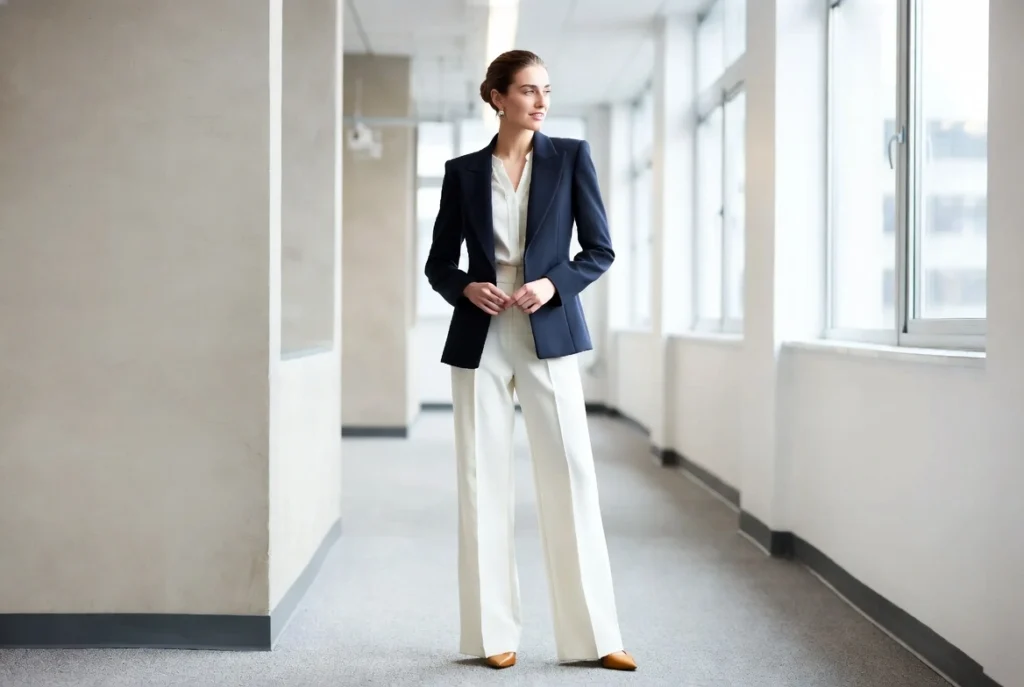
Women have a remarkably wide range of options within the business casual spectrum, and that creative freedom is worth embracing with thoughtfulness and confidence. The following ten outfits represent the most reliable, versatile, and stylish combinations available in contemporary professional dressing.
Outfit one is the tailored blazer and wide-leg trouser, perhaps the most dependable combination in modern workwear. Choose a structured blazer in camel, navy, or charcoal and pair it with wide-leg tailored trousers in a complementary neutral, finishing with a silk or cotton blouse tucked in at the front and pointed-toe flats or block heels. Outfit two pairs a pleated or A-line midi skirt with a fine-knit sweater for a polished look that requires minimal effort. Outfit three uses a fitted sheath dress layered under a longline structured cardigan, a combination that photographs beautifully on video calls and reads as formal enough for client-facing environments.
Outfit four is the tailored jumpsuit, a one-piece solution that instantly communicates effortless professionalism when cut well and worn with a thin belt and loafers. Outfit five pairs dark, well-pressed trousers with a patterned blouse in a tasteful geometric or abstract print. Outfit six gives the classic pencil skirt new life when paired with an oversized but tucked blouse and kitten heel boots in a textured fabric like tweed or ponte
. Outfit seven embraces the monochrome approach, dressing entirely in a single color for a sophisticated, visually elongating effect that reads as quietly luxurious. Outfit eight layers a structured blazer over a midi slip dress for a look that balances softness with authority. Outfit nine combines a turtleneck with tailored trousers and a longline coat for cooler months, creating an outfit that commands any room. Outfit ten is the classic belted shirt dress, cinched at the waist with a leather or woven belt, offering one of the most versatile one-piece solutions in contemporary workwear.
10 Business Casual Outfits for Men Done Right
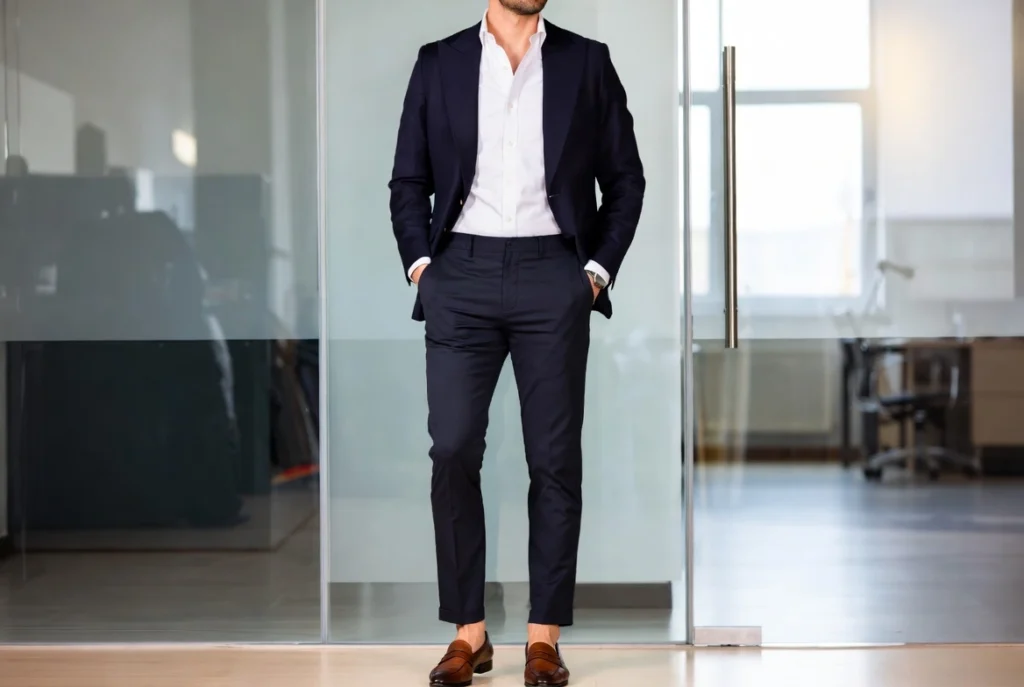
Men often feel more constrained by professional dress codes, but business casual offers meaningful room to develop a personal style while maintaining a sharp, credible image. The following ten outfits cover the full range of what business casual for men can and should look like.
Outfit eleven pairs slim or straight-fit chino trousers in navy, stone, or olive with a solid or subtly striped Oxford shirt, tucked in, finished with leather loafers and a simple belt. Outfit twelve is the dark jean and blazer combination, the quintessential modern business casual look, completed with leather Chelsea boots and a clean white shirt. Outfit thirteen pairs tailored suit trousers with a refined merino wool polo in a neutral tone, working particularly well in warmer months or creative industries. Outfit fourteen uses a fitted turtleneck in charcoal or cream worn under a sport coat, an elegant and contemporary take on professional dressing that projects quiet confidence.
Outfit fifteen pairs slim-fit trousers with a quality linen shirt in white or pale blue for warmer climates or summer months. Outfit sixteen layers a fine merino crewneck sweater over a collared shirt, a purposeful combination that works beautifully through cooler months. Outfit seventeen is the tonal business casual suit, a matching trouser and blazer in the same fabric worn without a tie, delivering a streamlined and modern look in deep navy, charcoal, or warm brown.
Outfit eighteen uses an oversized, well-pressed button-down shirt tucked loosely into straight-leg dress pants for a relaxed but polished result well-suited to open-plan and creative offices. Outfit nineteen combines pleated trousers with a high-quality fitted tee in white or charcoal for a European-influenced look that feels both relaxed and professional. Outfit twenty pairs a corduroy or tweed blazer in a warm tone with chinos and a plain shirt, adding texture and personality that works especially well in autumn and winter.
Outfit Ideas for Hybrid and Remote Work Settings
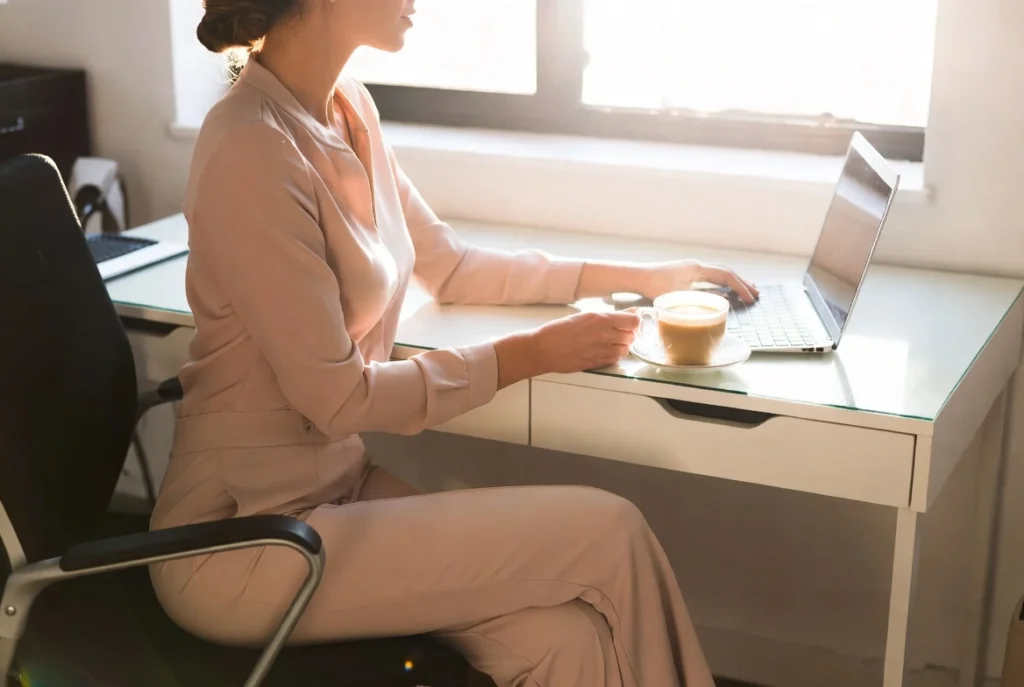
With hybrid work now a fixture of professional life, the business casual formula has had to adapt to a new reality. Dressing for cameras, unpredictable in-office days, and quick commutes requires a slightly different approach than traditional office dressing, with a greater emphasis on versatility, comfort, and pieces that look polished both in person and on screen.
Outfit twenty-one addresses video-call-heavy days with a quality knit top or structured blouse in a solid color, which reads as professional on screen and pairs comfortably with wide-leg ponte pants that look polished even when you need to stand. Outfit twenty-two layers a classic trench coat over any office combination to signal intentional dressing during commutes, regardless of what lies beneath. Outfit twenty-three features matching cardigan-and-blouse sets in neutral or soft colors, a pulled-together look that can adapt to office temperatures throughout the day
. Outfit twenty-four addresses denim-permitted workplaces with dark-wash straight or slim jeans, a structured blazer, and pointed flats or loafers. Outfit twenty-five uses a silk or satin-finish blouse in a jewel tone paired with straight-leg trousers to make a strong impression with minimal effort, the fabric itself communicating refinement. Outfit twenty-six pairs matching trouser-and-top sets, or co-ord sets, for a put-together look that removes the decision fatigue of combining separates. Outfit twenty-seven is the belted knit midi dress, one of the most versatile one-piece options in professional dressing that works across seasons with boots, flats, or heels.
Colors and Fabrics That Define Business Casual
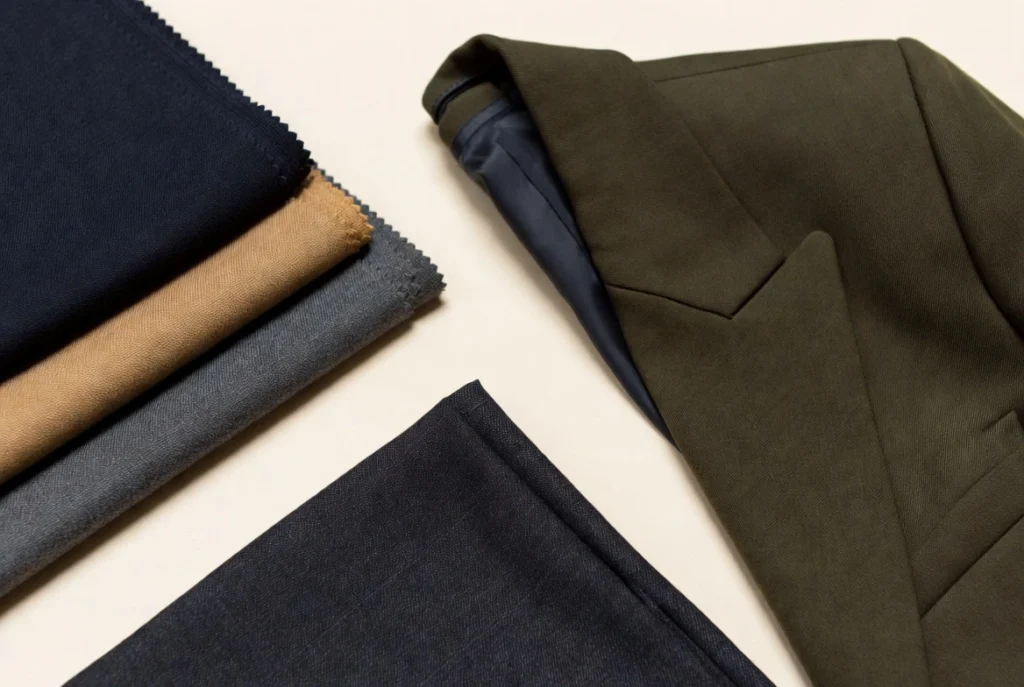
The colors and fabrics you choose have as much impact on the professionalism of an outfit as the silhouette itself. A beautifully cut blazer in a cheap, pilling fabric will always undermine the look, just as a strong, quality fabric in an awkward color can work against your overall impression. Understanding which colors and fabrics serve business casual best gives you a significant advantage in building outfits that look considered and intentional.
For colors, navy, ivory, charcoal, camel, warm taupe, and soft blush form the most reliable professional foundations. These neutrals work across seasons and mix effortlessly with one another. In 2025 and into 2026, olive green, terracotta, rich burgundy, and dark denim have emerged as strong accent colors that feel modern without being distracting or unprofessional. A pop of color through a blouse, a knitwear piece, or an accessory can bring personality to an otherwise neutral outfit without crossing into territory that draws attention away from your work.
For fabrics, prioritize materials that hold their shape, resist wrinkling, and photograph well. Quality wool and wool blends are among the best investments for trousers, blazers, and skirts. Cotton and cotton blends work beautifully for shirts and blouses. Ponte fabric is an underrated professional staple for its wrinkle resistance and comfortable stretch. Silk and satin-finish fabrics elevate blouses and dresses instantly. Linen reads as polished in warmer climates when well-pressed. The fabrics that rarely serve business casual well are overly sheer materials, heavily embellished party fabrics, and anything that stretches or pills after a few wears.
Shoes and Accessories That Complete the Look
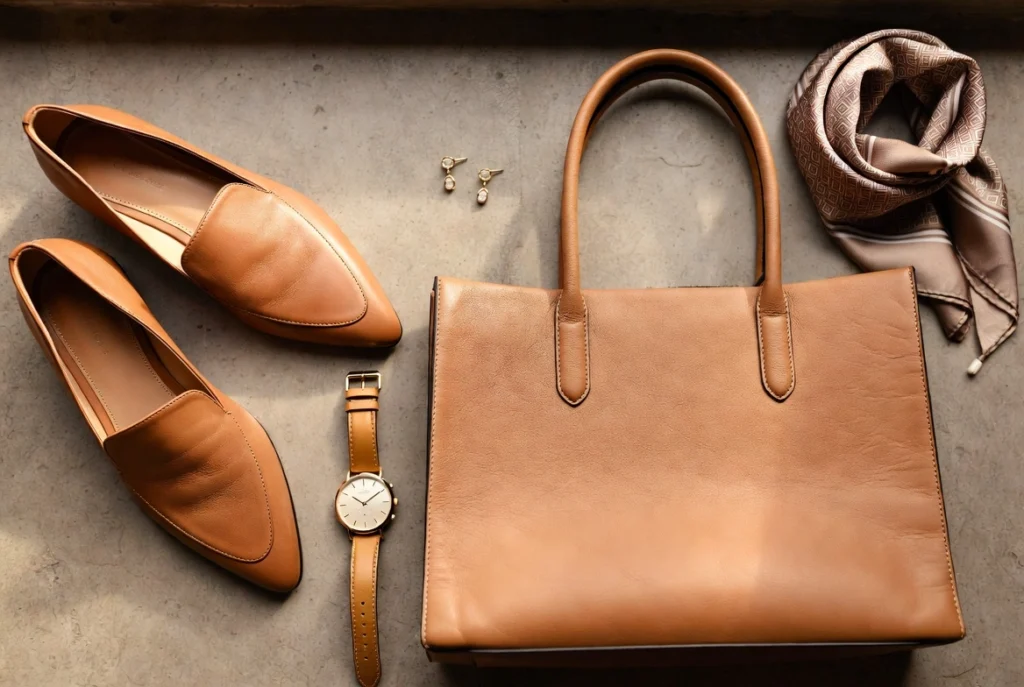
Footwear and accessories carry more weight in business casual dressing than most people realize. A strong outfit can be undermined by the wrong shoes or pulled together beautifully by the right ones. Understanding how shoes and accessories function as finishing tools rather than afterthoughts is the difference between looking put-together and looking genuinely polished.
For women, loafers have become the dominant professional shoe of the moment, working across nearly every business casual combination from midi skirts to wide-leg trousers to tailored shorts. Pointed-toe flats and kitten heels are equally reliable. Block heels and low ankle boots add structure and edge without sacrificing comfort during long workdays. For more formal business casual environments, classic pumps in nude, black, or tan remain a timeless and appropriate choice. Avoid athletic trainers with mesh panels, heavily platform styles, or sandals that read as summer casual.
For men, leather loafers, Oxford shoes, Chelsea boots, and monk strap shoes all fall comfortably within business casual. Clean white leather sneakers are increasingly accepted in modern and creative workplaces but remain inappropriate in more traditional or conservative environments. Accessories for men within business casual include quality leather belts matched to shoes, simple watches, and leather bags or structured totes. For women, structured leather handbags, quality tote bags, delicate jewelry, and silk scarves or headbands all serve as elevating elements. The principle across all accessories is the same: intentional, considered, and proportionate to the outfit rather than competing with it.
What to Avoid in Business Casual Attire
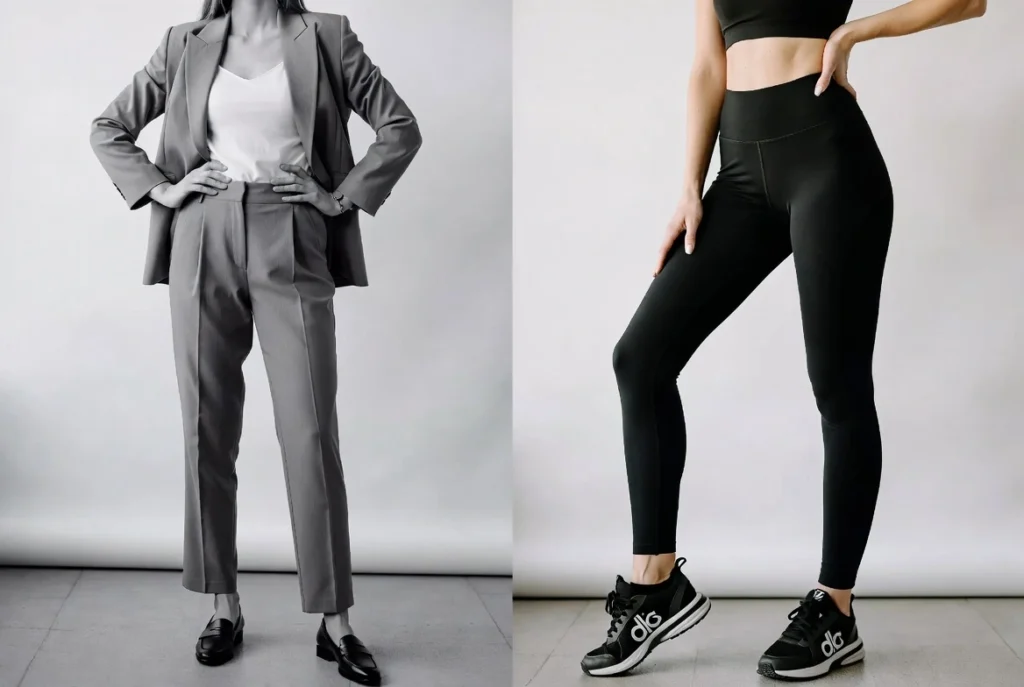
Understanding what falls outside business casual is just as valuable as knowing what belongs within it. Many wardrobe missteps in professional environments come not from dramatically inappropriate choices but from small details that quietly undermine an otherwise polished look.
Athletic wear of any kind, including leggings worn as trousers, running shoes with bold branding, and athletic shorts, remains inappropriate in virtually all business casual environments. Heavily distressed denim, visible holes, or bleach-washed finishes fall outside the definition even in workplaces that permit denim. Slogan tees, graphic prints with large text or imagery, and visible sportswear logos all compromise the professional quality that business casual requires. Overly revealing cuts, including very short hemlines in formal settings, deep plunging necklines without layering, or sheer fabrics without appropriate undergarments, move the outfit outside the boundaries of professional appropriateness.
Wrinkled or visibly worn clothing is perhaps the most quietly damaging element in professional dressing. An expensive garment that is crumpled or pilling reads as less professional than an inexpensive piece that is immaculately pressed and well-maintained. Flip-flops and beachwear footwear are universally inappropriate in business casual settings regardless of climate or industry. The guiding principle when in doubt is always to err on the side of being slightly more polished than the situation requires, as overdressing rarely carries the same professional risk as underdressing.
Building a Business Casual Capsule Wardrobe
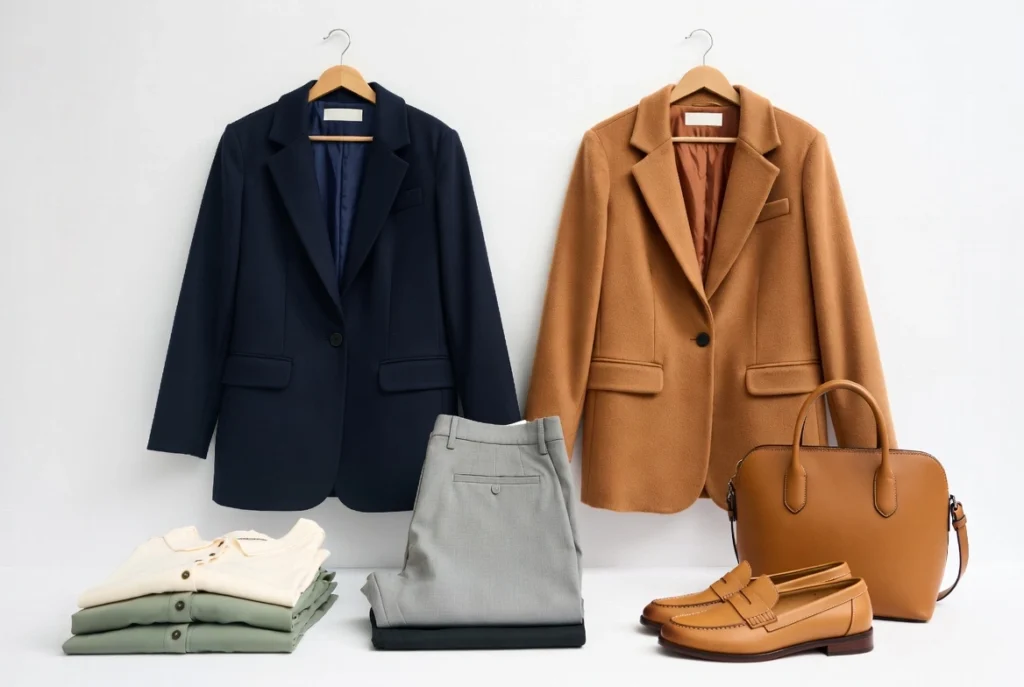
The most efficient and effective approach to business casual is building a capsule wardrobe: a curated collection of high-quality, versatile pieces that work together across dozens of outfit combinations. A well-built capsule eliminates decision fatigue, ensures you are always prepared, and delivers far more outfit variety than a larger collection of poorly chosen, incompatible pieces.
For women, the capsule foundation should include two or three pairs of well-fitted tailored trousers in neutral colors, two blazers in different neutrals such as navy and camel, a selection of five or six quality blouses and knit tops in solid colors, one or two midi skirts, a sheath dress or shirt dress, one jumpsuit, and two pairs of professional shoes in complementary neutrals. From this foundation, you can build an enormous variety of outfits by varying color placement, layering, and accessories.
For men, the capsule should include three to four pairs of quality trousers or chinos in navy, grey, stone, and black, two blazers in navy and a neutral warm tone, five to six shirts across Oxford, linen, and fine-knit styles, one turtleneck or crew neck sweater in a neutral color, and two to three pairs of professional shoes. A structured bag and a quality leather belt complete the foundation. The key across both wardrobes is investing in quality over quantity. Pieces that hold their shape, resist wear, and fit well will consistently outperform a large collection of inexpensive items that look exactly as cheap as they are after a few months of regular wear.
Seasonal Business Casual Outfit Strategies
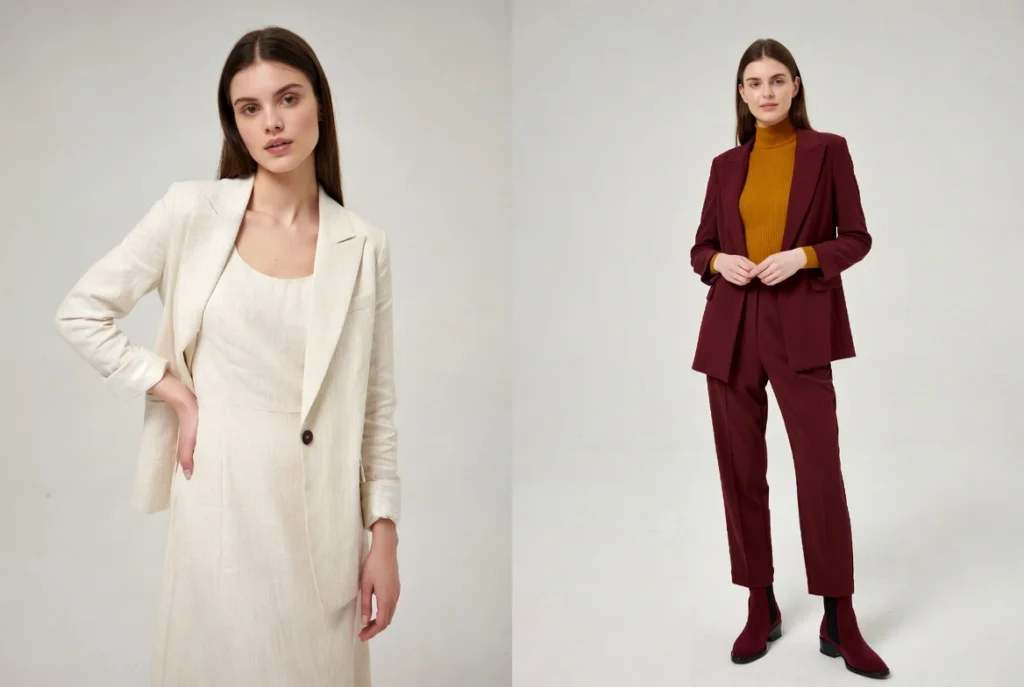
Business casual dressing requires adaptation across seasons, and understanding how to adjust your professional wardrobe as temperatures and conditions change ensures you are always presenting your best self regardless of what the calendar says. The core principles of professionalism and intentionality remain constant, but the fabrics, layering strategies, and specific pieces shift meaningfully with each season.
In spring and summer, prioritize breathable fabrics like cotton, linen, and lightweight wool blends that manage warmth without sacrificing the structure that business casual requires. Linen trousers and blazers in light neutrals work beautifully when well-pressed and fitted. Light-wash or soft-toned outfits in ivory, soft blue, or blush carry a fresh seasonal quality while remaining professional. Midi dresses in natural fabrics become particularly useful in warmer months, offering coverage and airflow simultaneously. For footwear, pointed mules, loafers without socks, and clean low sandals are acceptable in most business casual environments during summer.
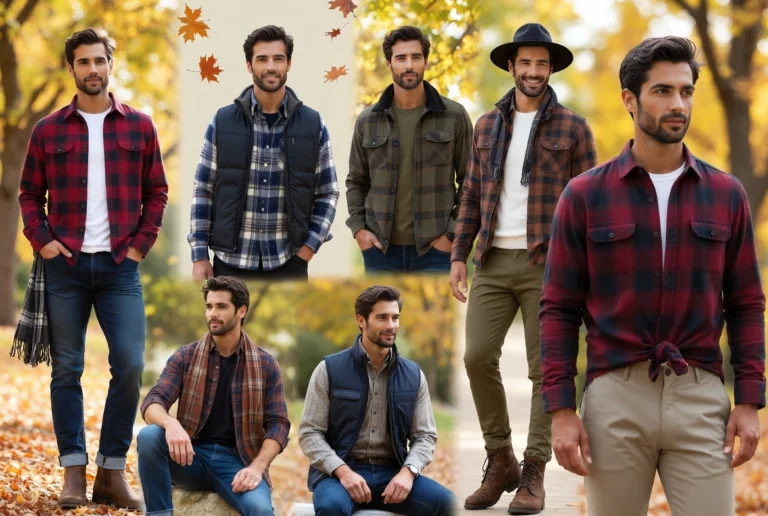
In autumn and winter, layering becomes your most powerful styling tool. Turtlenecks under blazers, cardigans over blouses, and longline coats over tailored trousers are all strategies that build depth and warmth while maintaining professional polish. Rich, warm colors including burgundy, forest green, camel, and dark chocolate come into their full strength during cooler months and pair beautifully with the heavier fabrics like wool and corduroy that dominate autumn and winter workwear. Ankle boots and leather loafers transition comfortably between seasons and remain appropriate through the colder months.
Conclusion
Business casual at its best is not a compromise between professionalism and comfort. It is a style language that, once genuinely understood, gives you real authority over how you are perceived in every professional setting. The thirty outfits and foundational principles in this guide represent a broad, practical, and current view of what business casual can look like across genders, seasons, and work environments.
The most important single principle is fit. A well-fitted garment in any fabric or price range will always outperform a poorly fitted luxury piece. The second most important principle is intentionality. When your outfit appears considered and deliberate, it signals to everyone around you that you are someone who pays attention to detail, and in a professional environment, that impression carries genuine and lasting weight.
Build your business casual wardrobe around strong, versatile foundations. Invest in quality where fit and fabric matter most, and allow your personal style to come through in the details: a print blouse, a structured bag, an unexpected color, or a refined accessory. Your clothes should work quietly in the background, reinforcing your presence without demanding attention. When you achieve that balance, you are no longer just dressed for work. You are dressed with purpose.
You may also like this post : 21+ Perfect Night Out Outfits That Deserve Their Own Spotlight
Frequently Asked Questions
Q1: Can I wear jeans for business casual? Yes, but only dark-wash, clean, unripped jeans styled with a blazer, tailored shirt, and professional footwear. Always check your specific company guidelines first, as not all workplaces permit denim even within a business casual policy.
Q2: Are sneakers appropriate for business casual? In modern and creative workplaces, clean leather or canvas lifestyle sneakers are increasingly accepted. Athletic trainers with mesh panels and bold sportswear branding remain outside the business casual definition in most traditional professional environments.
Q3: What is the most important element of a business casual outfit? Fit is the single most important element. A well-fitted garment in any price range will always look more professional than an expensive piece that does not fit correctly. After fit, the intentionality and cleanliness of the overall look matter most.
Q4: How do I build a business casual wardrobe on a budget? Focus on three to five core pieces in neutral colors that mix well together, and invest first in fit rather than brand. Having an inexpensive blazer or trouser tailored to fit properly produces far better results than wearing a designer piece with poor proportions.
Q5: Is business casual different for men and women? The underlying principles are identical: polished but not formal, comfortable but not casual, and always intentional. The specific garments differ between men and women, but both benefit from the same foundational approach of well-fitted pieces, quality fabrics, and considered accessorizing.